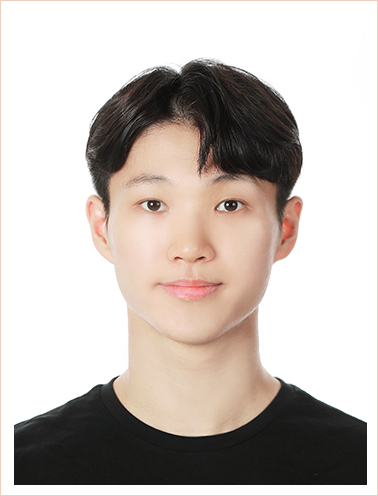
Résumé
MINSEOK CHO
Cheongju, South Korea
cho9911@gmail.com
rukkha1024.github.io
Email
RESEARCH PROFILE
I study how neural motor commands are reflected in muscle coordination and postural control. My work combines multi-channel electromyography, NMF-based muscle-synergy analysis, motion capture, force plates to examine repetitive responses to unexpected perturbations, with longer-term interests in motor-unit-level sensing, synthetic EMG, and neuromusculoskeletal digital twins.
Directions I want to take further:
- Measuring what surface EMG cannot reach: deep and trunk muscles, and activity closer to the motor-unit level
- Synthetic EMG and neuromusculoskeletal digital twins linking neural drive, motor units, and muscle force
- Subject-specific models that prescribe, not just describe, what an individual should change
- Muscle coordination with anticipatory postural responses
EDUCATION
Cheongju University Mar 2025-Aug 2027 (expected)
M.S. in Sports Medicine
Department of Sports Medicine; Advisor: Prof. Yushin Kim
GPA: 4.00/4.00
Hanyang University ERICA Mar 2019-Feb 2025
Sport Coaching; Media & Social Informatics (including two years of mandatory military service)
GPA: 3.62/4.00
GRANTS
- Master’s Student Research Grant, National Research Foundation of Korea. “Predicting Fall Risk in Older Adults Using Muscle Synergy Analysis and Convolutional Neural Networks (CNN).” Principal Investigator. KRW 12,000,000 (USD 8,700). 2026-2027.
JOURNAL ARTICLES
- Minseok Cho, & Yushin Kim. (2026). A within-subject biomechanical comparison of stepping and non-stepping responses to identical unexpected perturbations (under review).
- Compares stepping and non-stepping responses within the same participants.
- Uses identical unexpected perturbations to distinguish response strategy from perturbation conditions.
- Examines the biomechanical differences between the two response types.
- Minseok Cho, Dahoon Park, Ui Yeol Yoon, Jiyeon Yuk, & Yushin Kim. (2025). Effects of Biomechanical Improvements in Manual Handling Equipment on Users’ Muscle Activations. Archives of Orthopedic and Sports Physical Therapy, 21(2), 119-129. https://doi.org/10.24332/aospt.2025.21.2.12
- Compares trunk and lower-limb muscle activation in 28 healthy adults who performed pushing, pulling, and lifting tasks with a 20-kg load.
- Finds that the long adjustable handle reduced T7 erector spinae activation across all tasks and soleus activation during pulling compared with the short handle.
- Indicates that an extended adjustable handle may reduce muscular and musculoskeletal demands during industrial manual handling.
- Minseok Cho, Dahoon Park, & Yushin Kim. (2025). Muscle Synergy Analysis for Identifying Muscle Coordination Patterns: A Non-negative Matrix Factorization (NMF)-Based Case Study. Archives of Orthopedic and Sports Physical Therapy, 21(1), 31-43. https://doi.org/10.24332/aospt.2025.21.1.04
- Presents a practical framework that uses non-negative matrix factorization to decompose EMG signals into muscle synergies and variance accounted for to select the number of synergies.
- Demonstrates the framework with simulated two-channel EMG data under a single-synergy assumption.
- Uses five proportional, inverse, and independent signal patterns to illustrate muscle coordination in sports and clinical settings.
RESEARCH EXPERIENCE
Cheongju University - Master’s Research 2025-present
- Conducted biomechanics projects with 33 young adults and 40 older adults.
- Compared stepping and non-stepping responses to identical unexpected perturbations within subjects (under review, 2026).
- Analyzing age-related differences in perturbation responses in unconstrained environments (ongoing).
- PI, NRF Master’s Student Research Grant (2026-2027): predicting fall risk in older adults with muscle synergy and CNN.
- Analyzed gait muscle-coordination structures in patients with brain lesions using NMF-based muscle-synergy analysis and k-means clustering to compare patterns between groups.
- Analyzed how biomechanically improved manual-handling equipment changed trunk and lower-limb muscle activation during pushing, pulling, and lifting tasks with a 20-kg load.
- Created a Python-based fall-risk assessment and reporting system that grades experimental and questionnaire data and generates individualized PDF reports for older-adult participants (open-source).
Hanyang University ERICA - Undergraduate Research 2019-2025
- Studied motor-skill learning in the clean and jerk weightlifting movement across a three-week training period.
- Studied the effects of warm-up on golf-swing performance.
TECHNICAL SKILLS
- Data collection: 16-channel wireless EMG (Delsys), 14-camera Motive motion capture, and four force plates
- Analysis: EMG processing, NMF muscle-synergy analysis, k-means clustering, biomechanics, and postural-control data
- Machine learning: convolutional neural networks (CNN) for movement and EMG data
- Programming: Python, R
TEACHING & COMMUNITY ENGAGEMENT
Fall-Prevention Exercise Curriculum Co-author and Instructor 2025
- Co-authored fall-prevention teaching materials used in a specialist instructor training course and an education program for community-dwelling older adults.
- Delivered individualized fall-risk assessment reports and taught tailored fall-prevention exercises based on participant results.
- Participated in the 2025 Fall Prevention Specialist Instructor Training Course (BASIC), organized by the Korea Disease Control and Prevention Agency and the National Injury Management Center and operated by Korea University.
HOBBIES
- Artistic gymnastics; strength & functional training; workflow automation with Python